
Import/Export
Customs Clearance &
Port Logistics
Port Operations and Customs Clearance Division
For half a century, Yamatane’s port operations and customs clearance services have evolved alongside the changing logistics landscape driven by globalization. The expertise we’ve built through decades of experience has earned us the deep trust of our clients and high praise from customs and other government agencies.
Through personalized service from dedicated staff and accurate declaration procedures, we’ve built a rock-solid compliance framework backed by our Authorized Economic Operator (AEO) certification.
Our port logistics services provide container drayage for sea containers at major ports, primarily Tokyo, Yokohama, and Kobe.

AEO Certified Customs Broker
We hold customs broker licenses in Tokyo, Yokohama, and Kobe, and obtained our AEO certification in February 2010. The AEO program allows customs authorities to certify businesses that demonstrate strong cargo security management and legal compliance, granting them access to streamlined and simplified customs procedures.
Since the 9/11 attacks in 2001, international logistics has required both strict security and efficient operations. In 2005, the World Customs Organization (WCO) introduced an international framework that includes the Authorized Economic Operator (AEO) program, under which customs authorities certify businesses with strong security and compliance systems, granting them benefits such as simplified customs procedures. We uphold this certification as a guiding principle to ensure safe, secure, and swift customs clearance.
Tokyo Customs Office
Port of Tokyo handles more foreign trade containers than any other port in Japan, with countless products imported and exported by ship every day. Our office provides one-stop service for everything from customs procedures to import applications and inspections under related laws such as the Food Sanitation Act and the Act on the Prevention of Infectious Diseases in Livestock.

Wide-Ranging Expertise Centered on Food Imports
About 90% of our cargo consists of imports, ranging from wine and processed foods to clothing, general goods, and machinery.
We classify and register tariff codes for tens of thousands of product items in our database, using automated calculation programs and liquor tax aggregation systems to deliver the precise data and information services our clients need during customs clearance.
Our system also enables clients to communicate directly with our customs brokers—an advantage they consistently highlight. Having the brokers who handle the work serve as the main point of contact allows us to respond to client inquiries quickly and accurately.

Container Round Use (CRU) Implementation
We actively utilize the Container Round Use (CRU) system. CRU is a logistics method in which empty containers are sent directly to the next export loading site instead of returning to port, eliminating unnecessary empty runs, reducing costs, and lowering environmental impact (CO₂ emissions).
CRU is most effective in regions with balanced import and export flows and through partnerships among shippers using the same container types. It represents a promising approach to achieving more efficient and sustainable logistics.
Yokohama Customs Office
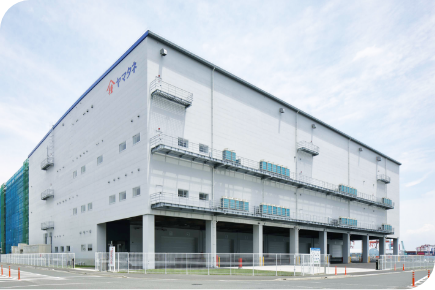
In July 2024, we relocated to our company’s newly established Honmoku Pier Office. Conveniently located next to Yokohama Customs’ Honmoku Pier Branch and the mega terminal, we primarily handle export cargo and Unaccompanied Baggage (moving goods) for import and export.
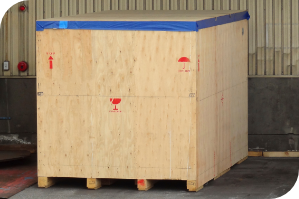
Export Packing Services
We collect cargo according to your schedule, deliver it to our partner packing companies, and ensure it’s packed appropriately for the destination country. As both the exporter’s representative and an AEO customs broker, we play a critical role in confirming whether cargo falls under Export Trade Control Order regulations. Once packing is complete, we deliver the cargo to the designated bonded area, obtain export clearance, arrange shipping, monitor vessel movements, and track everything through to the ship’s departure.
Kobe Customs Office
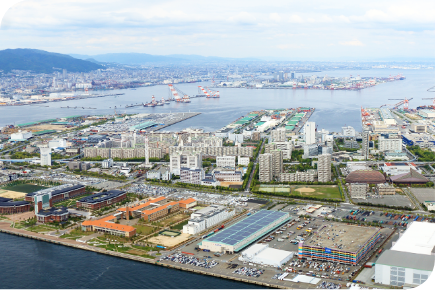
We received our customs broker license from the Kobe Customs Director on March 21, 1980. Since then, we have operated from Port Island—the heart of the Port of Kobe—building a long history of experience and proven results. We overcame the challenges of the 1995 Great Hanshin-Awaji Earthquake and continue to uphold the trust and expectations of our clients today.
Confectionery Raw Materials
We specialize in customs clearance for cacao beans and related products used by confectionery manufacturers.
Under the Plant Protection Act, cacao beans must undergo plant quarantine at the port to prevent pests and diseases from entering Japan. If pests are found, fumigation eliminates them, after which a Plant Inspection Certificate is issued. Food products, including raw materials, fall under the Food Sanitation Act and require quarantine office approval.
After testing or verification for pesticide residues, mycotoxins, and other contaminants, approval is granted and a Food Import Notification Certificate is issued. Our experienced customs brokers handle import declarations (where shape, manufacturing method, sugar content, and cacao percentage determine tariff classification and significantly affect duty rates), and after customs review and inspection, the import permit is issued. Only after completing all these steps can products enter domestic distribution and ship to confectionery factories.

Contact Us
For any inquiries regarding our business, services, or recruitment, please contact us here.
Contact Us